
Reliable Drone Spraying for Cooperatives: A Guide
Table of Contents
Why Cooperatives Turn to Reliable Drone Spraying Services
Evaluating a Cooperative Agricultural Spraying Provider
A Reliability Scorecard Cooperatives Can Use
Cooperative-Specific Governance Questions
Insurance and Compliance Verification
Building an Agricultural Spraying Service Checklist
Equipment and Payload Capacity
Uptime and Backup Systems
Insurance and Liability Coverage
Crop Dusting Services for Farms: Scope and Capabilities
Spraying Service Scheduling for Farms and Timing Considerations
Reliability Factors: What Separates Consistent Operators
Maintenance and Repair Discipline
Operational Planning and Seasonal Capacity
Compliance and Recordkeeping Checklist
Field-Trial Evidence to Request
Getting Started: Preparing Your Cooperative for Drone Spraying Services
Frequently Asked Questions
Last Updated: October 16, 2026
Why Cooperatives Turn to Reliable Drone Spraying Services
Agricultural cooperatives must manage large acreage efficiently while controlling costs. Reliable drone spraying for cooperatives solves this problem. At Texas Precision Ag Aviation, we provide precision application services that reduce chemical waste, minimize soil compaction, and reach difficult terrain ground equipment can't.
Ground rigs work fine in ideal conditions, but wet soil, steep slopes, and dense vegetation create operational headaches. Cooperatives managing thousands of acres across diverse terrain need flexibility, that's where reliable drone spraying for cooperatives becomes essential.
The shared cost model makes this especially valuable for members. Instead of each operation investing in equipment and licensing, members pool resources and access professional spraying services, eliminating equipment maintenance, operator training, and regulatory compliance burdens on individual farms.
Key Takeaway Cooperatives benefit from drone spraying services because they shift equipment costs and operational risk to a professional provider while maintaining precision application across challenging terrain.
Evaluating a Cooperative Agricultural Spraying Provider
Choosing the right provider determines whether your cooperative gets consistent results or faces downtime during critical spray windows. Build the review around five measurable categories: uptime and redundancy, repair and parts turnaround, service-level commitments, compliance and insurance, and cooperative-specific governance.
A Reliability Scorecard Cooperatives Can Use
Ask every candidate to answer the same questions in writing, then score them side by side:
Fleet redundancy: How many application aircraft does the provider hold, and how many are reserved as backups during peak season? A provider with only one or two units cannot guarantee continuity when one goes down mid-window.
Repair turnaround: What is the provider's stated average time from a grounded unit to a return-to-service unit? Ask whether they stock common wear parts, pumps, nozzles, booms, batteries, or order them per incident.
Parts availability: Are critical components domestically sourced and readily replaceable, or dependent on imported supply chains with long lead times? Domestic component sourcing shortens repair cycles materially.
Service-level commitments: Does the provider put response times, completion windows, and rework terms in the contract, or only in conversation? Get the commitment in writing.
Backup capacity during peak demand: If three member fields need spraying the same week, can the provider dispatch enough units to cover all three without pushing any past its window?
A provider that documents redundancy, stocked parts, and contractual service levels is a different risk profile than one promising reliability verbally. Score each category, weight it to your priorities, and keep the scorecards on file.
Cooperative-Specific Governance Questions
Most evaluations ignore how a cooperative actually operates. Ask these before signing:
Member eligibility and scheduling priority: How are member requests queued? First-come, first-served, or by crop-criticality? Who at the cooperative authorizes a job?
Service area and mobilization: What is the provider's travel radius, and does mobilization time count against your spray window?
Responsibility split: Who owns the equipment, who supplies the operator, and who carries liability during transit versus during application? Clarify this in the agreement.
Data and recordkeeping: Who holds the application records, the provider, the cooperative, or both, and in what format? Cooperatives often need these for member reporting and regulatory review.
Dispute and rework process: If coverage is inadequate, what is the remedy, and how quickly is it applied?
Insurance and Compliance Verification
Verify the provider carries comprehensive liability coverage protecting both their operation and your members. Request a certificate of insurance naming your cooperative as an additional insured, and confirm the policy covers crop damage from application error, drift damage to adjacent properties, and chemical handling. Confirm operators hold current certifications and that the provider follows label requirements and drift-mitigation practices for every product. A provider who can't produce these documents is a compliance risk your board shouldn't absorb.
Watch Out A provider without documented backup equipment, stocked parts, or insurance creates financial risk for your cooperative. Equipment failure during spray season can cost members productivity they cannot recover that year.
Key Takeaway Evaluate providers against a written scorecard covering redundancy, repair turnaround, service-level commitments, compliance, and cooperative governance, not against verbal assurances.
Building an Agricultural Spraying Service Checklist
Use this checklist when vetting providers for your cooperative agricultural spraying needs.
Farmers Cooperative
Equipment and Payload Capacity
Payload capacity directly affects acreage covered per flight cycle. Larger tanks mean fewer refill stops and faster completion of your spray schedule.
Ask about spray tank size, nozzle configuration, and coverage per acre. Different crops and chemicals require different application rates, can the provider adjust spray patterns for your needs? Texas Precision Ag Aviation uses high-performance drones with USA-made components, ensuring superior reliability and performance for every operation.
Also ask about droplet size and drift control. Proper nozzle selection prevents drift that could damage neighboring properties or reduce effectiveness, and a professional provider will discuss these details openly.
Uptime and Backup Systems
Uptime separates adequate providers from truly reliable ones. Ask what percentage of scheduled applications the provider completes on time.
Key questions to ask:
How many backup drones does the provider maintain?
What is their average turnaround time for equipment repairs?
Do they have weather protocols that protect your spray window?
What is their response time if a drone fails during your scheduled application?
Insurance and Liability Coverage
Your cooperative's liability exposure increases when using any external service. Verify the provider's insurance covers:
Crop damage from application errors
Drift damage to adjacent properties
Equipment failure that prevents scheduled applications
Chemical handling and storage compliance
Request a certificate of insurance naming your cooperative as an additional insured to protect member farms if something goes wrong.
Crop Dusting Services for Farms: Scope and Capabilities
Crop dusting services cover a broader range of applications than many cooperatives initially realize. Beyond standard pesticide application, professional spraying providers can handle nutrient application, fungicide treatment, and targeted herbicide spot spraying.
Scope depends on equipment, licensing, and experience. Texas Precision Ag Aviation addresses crop protection across multiple crop types and field conditions, understands regulatory requirements for different chemicals, and adjusts application methods accordingly.
Ask providers about experience with your specific crops. Wheat, cotton, corn, and specialty crops each have different spray timing windows and chemical compatibility requirements; a provider familiar with your region's growing season can optimize timing.
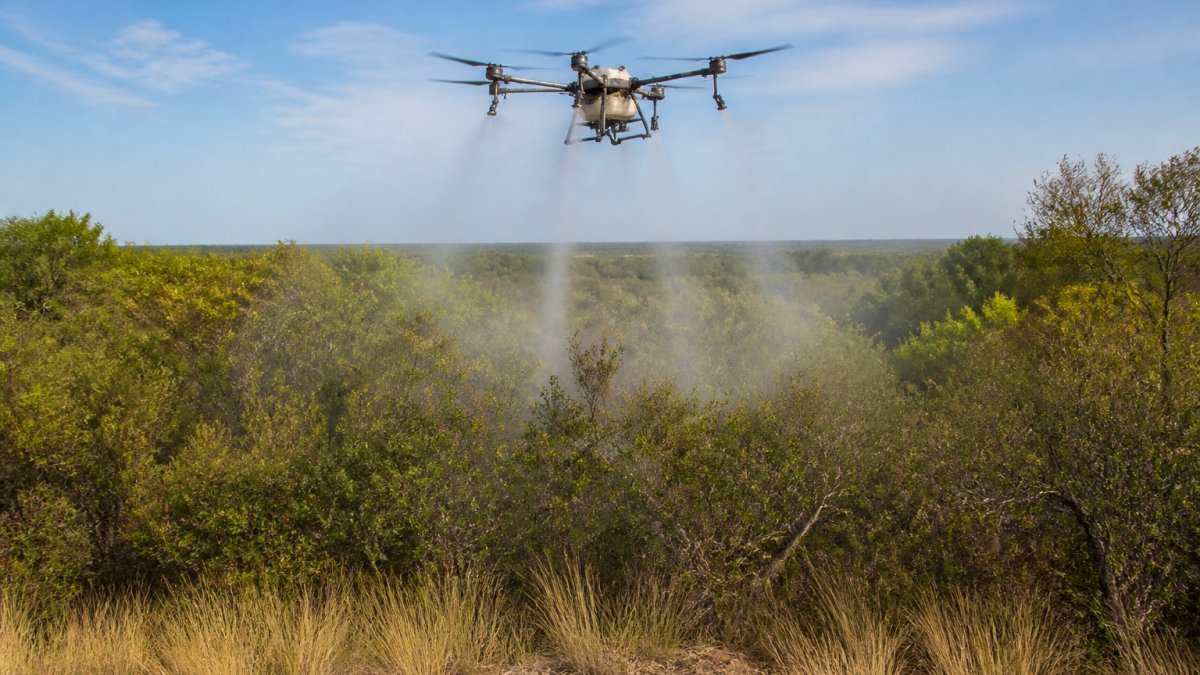
Also discuss their capability for difficult-terrain applications. Ranches with steep slopes, creek bottoms, or dense brush require precise navigation and spray control. Our services for cooperatives managing rangeland mean accessing areas that traditional ground equipment cannot reach safely or efficiently.
Spraying Service Scheduling for Farms and Timing Considerations
Timing determines whether an application succeeds. Missing a spray window by a few days can mean the difference between controlling a pest outbreak and losing significant yield.
Work with your provider to establish a seasonal schedule well before peak spray season. Discuss:
Optimal application windows for each crop and chemical
Weather requirements (wind speed, temperature, humidity)
Turnaround time between applications if multiple passes are needed
Contingency scheduling if weather delays the initial application
A cooperative with reliable drone spraying for cooperatives built into its operational plan can respond quickly to pest pressure or disease outbreaks, and providers with detailed weather monitoring and flexible scheduling can often fit emergency applications in.
Document spray timing in writing, dates, acreage, chemicals, and weather conditions, to protect your cooperative if regulatory questions arise and help the provider optimize future applications.
Pro Tip Schedule your critical spray applications early in the service provider's season. Providers often have more availability and flexibility before peak demand limits their scheduling options.
Reliability Factors: What Separates Consistent Operators
The difference between consistent and struggling providers comes down to operational discipline, seasonal capacity planning, and compliance readiness. Reliable operators invest in systems, not just equipment.
Maintenance and Repair Discipline
Reliable operators keep detailed maintenance logs for every unit, schedule maintenance on a fixed calendar rather than when equipment fails, employ multiple trained technicians so one absence doesn't create a bottleneck, and stock common wear parts rather than ordering per incident.
Operational Planning and Seasonal Capacity
Reliability at the cooperative level is a capacity question. Before the season, work with your provider to estimate acres per day under realistic conditions, tank refills, battery swaps, travel between fields, weather holds, then compare that against your total acreage and available spray windows.
A practical planning sequence:
Map demand: Total member acreage by crop, terrain type, and treatment priority.
Estimate throughput: Acres per unit per day, adjusted for refill and recharge time and travel.
Identify windows: Optimal application windows per crop and product, plus weather requirements (wind speed, temperature, humidity).
Stress-test: What happens if a week of weather delays pushes everything back? Does the provider have the units and crew to catch up?
Set priorities: Agree in advance which member requests take precedence when demand exceeds capacity.
Providers who track their own metrics, applications completed on schedule, average acreage per day, rework rate, can give real numbers instead of estimates.
Compliance and Recordkeeping Checklist
Reliability includes staying on the right side of the rules. Confirm the provider handles each of these, and keep your own copies:
Operator certification: Current credentials for every pilot applying product.
Aircraft and application rules: Compliance with applicable aviation and agricultural application requirements.
Pesticide labels: Application strictly per label directions, including rate, timing, and buffer requirements.
Drift mitigation: Documented nozzle selection, droplet size management, and wind-speed thresholds.
Application records: Dates, acreage, products used, rates, and weather conditions, retained for regulatory review and member reporting.
Field-Trial Evidence to Request
Rather than accepting broad reliability claims, ask for crop- and condition-specific results: coverage achieved, efficacy against the target pest or vegetation, downtime experienced, and cost per acre under similar conditions. Transparent trial data, even informal, from comparable terrain, tells you more than a general promise.
Key Takeaway Reliability is measurable: maintenance discipline, seasonal capacity math, a compliance checklist, and field-trial evidence. Ask for all four in writing before committing your cooperative's acreage.
Getting Started: Preparing Your Cooperative for Drone Spraying Services
Preparing your cooperative for reliable drone spraying for cooperatives involves practical and administrative steps. Start by documenting current spraying needs across all member operations.

Map your service area showing field locations, acreage, terrain challenges, and current pest or vegetation issues so providers understand the scope of work and any special requirements.
Establish internal communication protocols: who authorizes applications, how members request service, and how problems or rework requests are reported. Clear procedures prevent confusion when the provider needs quick decisions during spray season.
Also prepare your members for the transition. Explain how drone spraying differs from ground equipment. Discuss the benefits (reduced soil compaction, faster application, terrain access) and the limitations (weather sensitivity, smaller tank capacity per flight). Member buy-in makes the transition smoother.
Finally, review your cooperative's insurance and liability coverage, confirm current policies cover contracted spraying services, and discuss gaps with your insurer before signing a service agreement.
Reliable drone spraying for cooperatives requires choosing a provider who invests in equipment redundancy, maintains rigorous maintenance schedules, and carries comprehensive insurance. Texas Precision Ag Aviation brings precision application expertise, American-made drone technology, and USDA approval to every cooperative partnership.
Frequently Asked Questions
What should a cooperative ask before hiring a drone spraying provider?
Request documentation of equipment specifications, uptime records, insurance coverage limits, and experience with your specific crop and terrain. Ask about backup equipment availability, response time for service calls, and references from other cooperatives. Verify licensing and compliance with EPA pesticide application regulations. Confirm the provider tracks application records and provides detailed post-spray documentation showing coverage, chemical used, and acreage treated.
How can a cooperative evaluate reliability in a drone spraying service?
Assess equipment maintenance schedules, battery life and charging infrastructure, payload capacity for your typical application volumes, and weather-dependent downtime. Ask how the provider handles missed application windows or equipment failure during critical spray seasons. Check references from similar operations and review their track record on completing scheduled applications without delays.
Can drone spraying services handle brush and prickly pear control as well as crop applications?
Yes, agricultural spraying services can apply herbicides for brush and invasive species control across large acreage. Precision application reduces chemical use compared to ground equipment while reaching difficult terrain. USDA-approved providers have demonstrated effectiveness on mesquite, prickly pear, and other rangeland challenges. Confirm the provider has experience with the specific herbicides needed and understands the application timing and coverage rates for vegetation control on your property.
How should a cooperative prepare fields before a spraying service arrives?
Provide detailed field maps showing acreage, terrain obstacles, and any no-spray zones. Clear access roads and landing areas. Confirm weather conditions are suitable, wind speed, temperature, and humidity affect spray drift and application effectiveness. Notify neighbors if applicable. Have chemical orders placed and ready, and ensure equipment staging areas are accessible. Coordinate timing with the provider to avoid conflicts with other farm operations and ensure optimal application conditions.
LEARN MORE

Comments