
Avoiding Soil Compaction in Agriculture: 2026 Guide
Table of Contents
What Causes Soil Compaction in Agriculture
How Heavy Machinery and Wet Conditions Compound the Problem
Soil Compaction Testing Methods That Show You Where the Damage Is
Controlled Traffic Farming: Keeping Wheels Off the Root Zone
Cover Crops for Soil Structure and Compaction Recovery
How Aerial Crop Spraying Cuts Field Traffic and Compaction Risk
Practical Steps for Avoiding Soil Compaction in Agriculture
Frequently Asked Questions
Last Updated: October 18, 2026
What Causes Soil Compaction in Agriculture
Soil compaction is the compression of soil particles into a dense layer that blocks air, water, and roots from moving freely. It happens when pressure on the surface exceeds what the soil structure can bear, and in farming, most of that pressure comes from equipment.
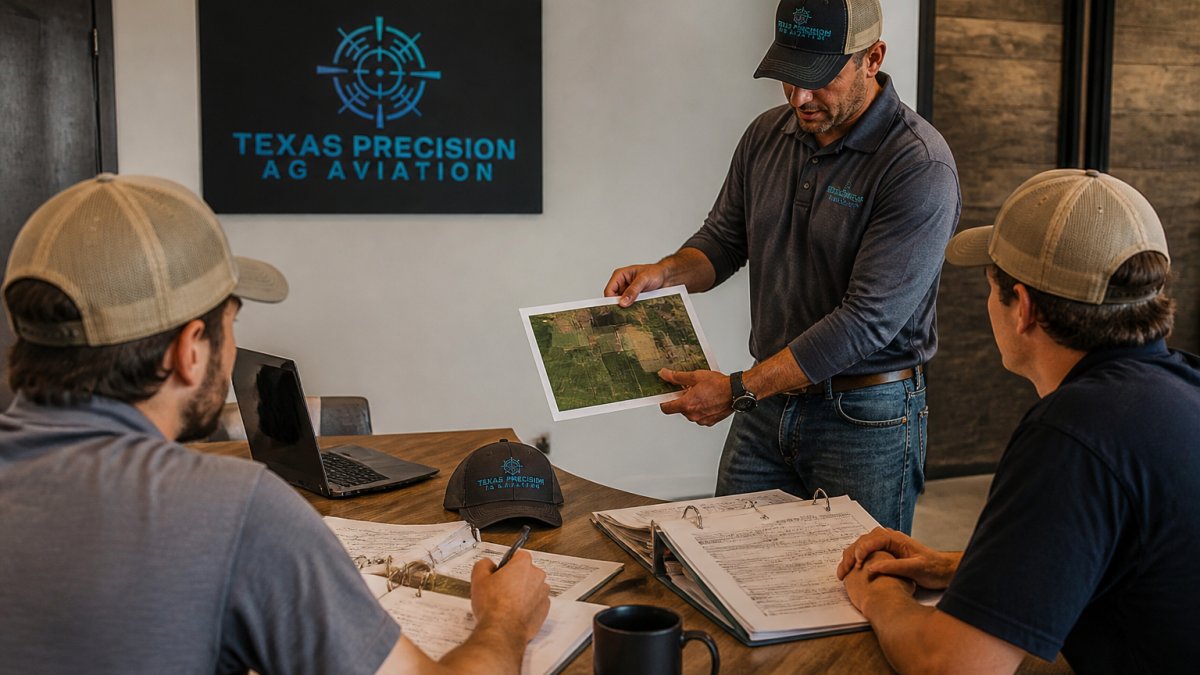
This guide from Texas Precision Ag Aviation, Inc covers the causes, the tests, and the practical fixes. We spray crops and brush from the air, so we see compaction damage from a different angle: from above, the ruts and bare lanes stand out like scars across a field.
Four forces drive most compaction:
Axle load: the heavier the machine, the deeper the damage goes
Tire pressure and contact area: narrow, overinflated tires concentrate weight
Number of passes: each trip compounds the last
Soil moisture: wet soil compacts far more easily than dry soil
The last one matters most. A field at the wrong moisture level can be damaged by a single pass.
How Heavy Machinery and Wet Conditions Compound the Problem
Wet soil is the trap. Water lubricates particles, so they slide closer together under weight and stay packed once they dry.
A combine or sprayer that leaves no mark on dry ground can cut deep ruts after rain. Those ruts become hardpan once they bake in the sun. Roots then hit a barrier and stop.
The fix is timing. Stay off saturated ground when you can, and reduce loads when you can't. USDA Natural Resources Conservation Service guidance on soil compaction notes that damage from a single wet-season pass can take years to undo.
Watch Out Running heavy equipment over wet soil creates a compacted layer that can persist for seasons. One rushed pass in the wrong conditions can cost you yield across the whole field, not just the rut line.
Soil Compaction Testing Methods That Show You Where the Damage Is
Testing tells you where the problem actually lives, which is rarely the whole field. Three methods cover most farm needs.
Penetrometer probe. A metal rod with a pressure gauge, pushed into the soil. It stops or spikes where a hard layer sits. Cheap, fast, and good for mapping zones.
Soil pit and profile check. Dig a hole and look at the sidewall. Roots that turn sideways or flatten out at a set depth mark a compaction layer.
Bulk density sample. A ring sampler pulls a known volume of soil, which gets dried and weighed. Higher density means tighter soil.
Test when the soil is moist but not saturated. A dry probe reads false resistance, and a wet one slides through layers you need to find.
Walk a zigzag across the field and log each stop. Mark the bad zones on a map. That map decides where you change traffic patterns and where you send aerial applications instead.
Controlled Traffic Farming: Keeping Wheels Off the Root Zone
Controlled traffic farming (CTF) means confining every machine to the same lanes, season after season. The compacted strips become permanent roads. The rest of the field never gets touched.
The payoff is simple: most of the field stays loose, and roots spread without hitting a wall.
Getting started takes discipline:
Pick one lane width and stick to it across all equipment
Match axle widths and GPS guidance to that width
Mark lanes visibly for every operator
Keep sprayers and tenders on the lanes, no exceptions
Review the layout each season before planting
The catch is equipment. Retrofitting a mixed fleet to one track width takes money and planning. Farms that run a single brand with matched axle settings have an easier time.
What most guides miss: CTF only works if every operator follows it. One driver cutting across a bed undoes the system for that zone.
Pro Tip Start CTF on your worst-compacted field first. The yield recovery there is easiest to see, and it builds buy-in for extending lanes across the rest of the farm.
Cover Crops for Soil Structure and Compaction Recovery
Cover crops rebuild structure from the inside. Deep-rooted species like radish, turnip, and cereal rye push through hard layers and leave channels as roots decay.
Those channels do two jobs. They drain water and give the next cash crop a path down.
A workable rotation for compacted ground:
Tillage radish: strong taproot, winter-kills in cold zones
Cereal rye: deep fibrous roots, good for holding soil
Annual ryegrass: aggressive rooting, needs management to terminate
Legume mixes: add nitrogen while loosening soil
Timing beats species choice. Plant early enough for roots to establish before frost. Terminate before the cover sets seed and steals moisture from the cash crop.
Biological drilling helps too. Earthworms and soil microbes break down organic matter and create stable aggregates. A field with active biology resists compaction better than a dead one.
Don't expect a single season to fix hardpan. Cover crops work gradually, and the improvement shows up in how the ground handles water and how roots develop.
How Aerial Crop Spraying Cuts Field Traffic and Compaction Risk
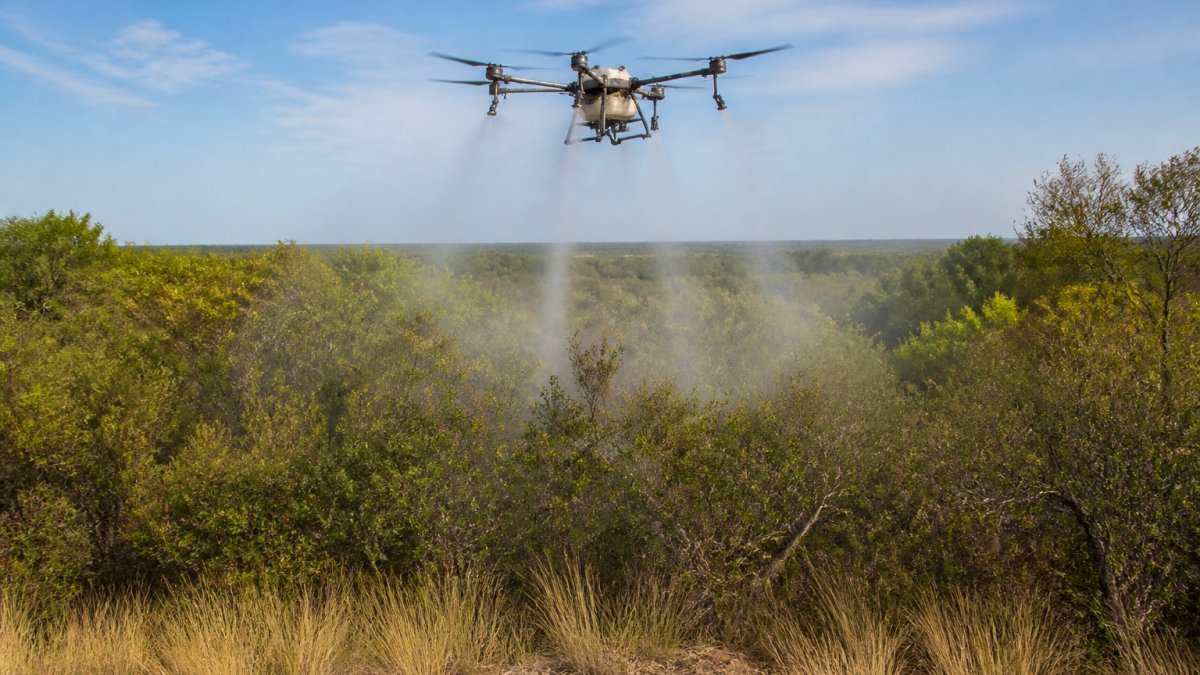
Aerial crop spraying removes the heaviest passes from the field entirely. A sprayer full of product is one of the heaviest machines a farm runs, and every trip adds pressure. Move that job to the air and the soil never feels the load.

We run this service at Texas Precision Ag Aviation, Inc. Our drones carry the product over the crop and land only at the edge of the field. No wheel tracks, no ruts in wet spots, no compaction on the lines where it hurts most.
The benefits stack up:
Zero ground pressure on the crop
Access to wet fields a ground rig would cut to pieces
No need to wait for soil to dry before treating
Coverage of rough terrain and steep ground
This matters when disease or pests hit during a wet stretch. A ground sprayer waits. An aerial application goes.
Our aircraft use USA-made onboard computers and firmware, with no Chinese components. We are USDA approved for brush and prickly pear control, and that approval matters when you need an application done to standard.
Practical Steps for Avoiding Soil Compaction in Agriculture
Avoiding soil compaction in agriculture comes down to fewer passes, lighter loads, and better timing. Here is the sequence we would follow on any farm dealing with it.
Problem | Fix | Where It Helps |
Deep ruts from wet-season passes | Stay off saturated soil | Prevents new hardpan |
Unknown damage zones | Probe and map the field | Targets the real problem |
Repeated wheel tracks | Controlled traffic lanes | Protects the root zone |
Hard layers below topsoil | Deep-rooted cover crops | Breaks the layer over time |
Heavy sprayer passes | Aerial application | Removes the load entirely |
Work through it in order:
Test and map. Find the compacted zones before spending money.
Fix drainage. Waterlogged corners compact first.
Set traffic lanes. Keep wheels in the same place.
Plant cover crops. Let roots do the deep work.
Move heavy applications to the air. Cut the passes you can't avoid.
The last step is where we come in. Avoiding soil compaction in agriculture is a traffic problem before it is anything else. Every pass you remove is pressure the soil never takes.
Key Takeaway The cheapest compaction fix is the pass you never make. Cut one heavy sprayer trip and you remove the load that causes the damage in the first place.
Frequently Asked Questions
What causes soil compaction in agriculture?
Soil compaction happens when pressure from heavy equipment, livestock, or repeated passes squeezes soil particles together and collapses the pore space that holds air and water. The risk climbs when soil is wet, because water lubricates particles and lets them pack tighter. Axle loads, tire pressure, and the number of passes all matter. A single pass with a loaded grain cart on damp ground can create a hard layer that roots struggle to push through for years.
How can farmers prevent soil compaction?
Prevention starts with staying off wet fields and keeping total axle loads down. Controlled traffic farming, where all equipment follows the same wheel tracks, limits compaction to narrow lanes. Cover crops for soil structure add roots that hold pores open and build organic matter. Soil compaction testing methods, including penetrometer readings and profile pits, tell you where the damage is so you can target fixes. Moving some applications to aerial crop spraying removes ground passes entirely.
Can aerial spraying reduce equipment traffic in fields?
Yes. Every field pass you move from a ground rig to an aircraft removes weight from the soil. Aerial crop spraying covers the field without wheels touching the ground, so it eliminates the compaction risk that comes with loaded sprayers on wet ground. It also works when fields are too wet for ground equipment. For farmers dealing with compaction, shifting spray applications to the air is one of the simplest ways to cut traffic.
How can you tell if agricultural soil is compacted?
Look for stunted roots that turn sideways instead of growing down, standing water after rain, and hard soil that resists a probe. A penetrometer pushed into the profile shows a sudden spike in resistance at the compacted layer. Digging a profile pit lets you see platy structure and flattened roots directly. Pair those checks with yield maps to spot areas that lag behind the rest of the field.
Compaction builds slowly and shows up late, usually as yield loss you can't explain. The fix starts with fewer wheels on the field. Texas Precision Ag Aviation, Inc provides aerial crop spraying, brush control, and prickly pear eradication across large acreage, with precision application that keeps heavy equipment off your soil. Learn more about how our service protects your ground while it protects your crop.
LEARN MORE

Comments